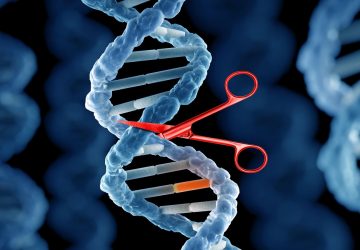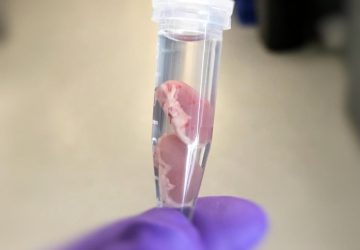
Bacteria don’t have easy lives. In addition to mammalian immune systems that besiege the bugs, they have natural enemies called bacteriophages, viruses that kill half the bacteria on Earth every two days. Still, bacteria and another class of microorganisms called archaea (first discovered in extreme environments such as deep-sea volcanic vents) manage just fine, thank you, in part because they have a built-in defense system that helps protect them from…
Read MorePaper pumps power portable microfluidics, biomedical devices
Biomedical engineering researchers from North Carolina State University and the University of North Carolina at Chapel Hill have developed inexpensive paper pumps that use capillary action to power portable microfluidic devices, opening the door to a range of biomedical tools. Microfluidic devices are devices that manipulate fluids which have a volume of one microliter or less — volumes substantially smaller than a single teardrop. These devices hold promise for use…
Read MoreEngineered intrinsically disordered proteins provide biomedical insights
Biomedical researchers have engineered the first examples of biomimetic structures composed from a mysterious class of proteins that lack any sort of internal structure. In a paper titled, “Programming molecular self-assembly of intrinsically disordered proteins containing sequences of low complexity,” and published on Jan. 30 in the journal Nature Chemistry, researchers from Duke University, the University of North Carolina, Chapel Hill and The University of New Mexico reveal the ability…
Read MoreNanoparticles for 3-D printing in water open door to advanced biomedical materials
Researchers at the Hebrew University of Jerusalem’s Center for Nanoscience and Nanotechnology have developed a new type of photoinitiator for three-dimensional (3D) printing in water. These novel nanoparticles could allow for the creation of bio-friendly 3D printed structures, further the development of biomedical accessories, and drive progress in traditional industries such as plastics. 3D printing has become an important tool for fabricating different organic based materials for a variety of…
Read MoreNew biotechnology product to make waterproof paper using natural enzymes
Oriol Cusola, a 29-year-old researcher from Lleida, has patented a new aqueous compound to functionalise or modify the properties of paper and any other cellulosic material. The compound uses natural enzymes instead of the traditional chemical reagents, is biodegradable, and involves no environmental impact. Most important, it is easily applicable in the production process and requires no additional investment. This major technological innovation will greatly facilitate the creation of new…
Read MoreCredence Genomics creates history in Sri Lankan biotechnology industry
Credence Genomics (Pvt.) Ltd, Sri Lanka’s premier specialized DNA diagnostics services provider has achieved yet another first by being published in the acclaimed BioMed Central (BMC) Infectious Diseases publication. With their innovative range of specialized DNA diagnostic tests, Credence Genomics has reached out to benefit the medical community in Sri Lanka and in the region, with the uncompromised guarantee of accuracy and speed of test reports by achieving unparalleled benchmarks….
Read More‘2017 Korea Bioplus’ diagnoses global biotechnology issues
The 2017 Korea Bio plus opened its third annual conference to discuss global biotechnological issues in Seoul Monday. Attending the conference are Korean and foreign institutions and businesses related to biotechnology, including the Massachusetts Institute of Technology, analyzing various areas such as global bio-logistics, new trend bio-drug, genome business and smart start. The conference also included a separate section regarding collaboration with MIT. It focused on two primary topics –…
Read MoreNon-natural biomedical polymers produced from microorganisms
Renewable non-food biomass could potentially replace petrochemical raw materials to produce energy sources, useful chemicals, or a vast array of petroleum-based end products such as plastics, lubricants, paints, fertilizers, and vitamin capsules. In recent years, biorefineries which transform non-edible biomass into fuel, heat, power, chemicals, and materials have received a great deal of attention as a sustainable alternative to decreasing the reliance on fossil fuels. A Korean research team headed…
Read MoreFederal U.S. agencies need to prepare for greater quantity, range of biotechnology products
A profusion of biotechnology products is expected over the next five to 10 years, and the number and diversity of new products has the potential to overwhelm the U.S. regulatory system, says a new report from the National Academies of Sciences, Engineering, and Medicine. The U.S. Environmental Protection Agency, the Food and Drug Administration, the U.S. Department of Agriculture, and other agencies involved in regulating biotechnology products should increase their…
Read MoreNew class of materials could revolutionize biomedical, alternative energy industries
Polyhedral boranes, or clusters of boron atoms bound to hydrogen atoms, are transforming the biomedical industry. These humanmade materials have become the basis for the creation of cancer therapies, enhanced drug delivery and new contrast agents needed for radioimaging and diagnosis. Now, a researcher at the University of Missouri has discovered an entirely new class of materials based on boranes that might have widespread potential applications, including improved diagnostic tools…
Read More