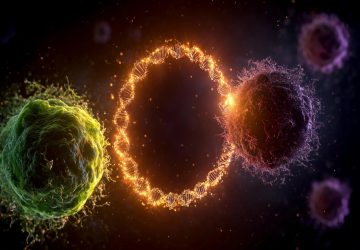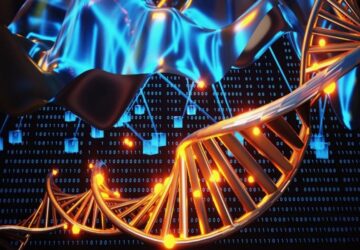
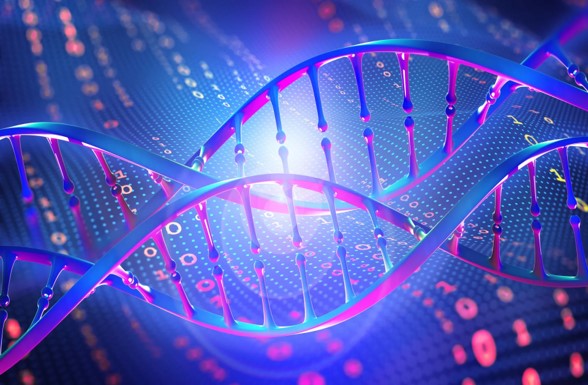
Researchers combined synthetic DNA with a semiconductor to create an ultra-low-power memory device capable of storing and processing information in the same place. The bio-hybrid technology could eventually help make AI systems and next-generation computers far more energy efficient.
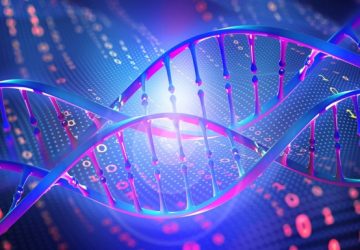
DNA serves as the genetic blueprint for every living organism, but it is also an extraordinarily dense way to store information. A single gram can hold about 215 million gigabytes of data. Bringing that remarkable storage capacity into electronics could lead to more efficient data centers, faster processing and systems capable of handling increasingly complex information.
The challenge has been finding a way to make biological DNA function effectively alongside electronic materials. Penn State researchers have now developed an approach designed to overcome that incompatibility.
The work, published in Advanced Functional Materials and the subject of a patent application, relies on two key components. One is synthetic DNA, made from commercially available, chemically engineered molecules arranged into short genetic sequences tailored for specific electronic requirements. The other is crystalline perovskite, a semiconductor already used in technologies including solar cells, lasers and data storage devices.
“Biology and electronics are different domains,” said Kavya S. Keremane, co-corresponding author and postdoctoral researcher in materials science and engineering at Penn State. “Bridging these two fields required developing an entirely new materials platform that allows them to function seamlessly together. By combining the information storage capabilities of DNA with the exceptional electronic properties of perovskite semiconductors, we created a bio-hybrid system that fundamentally changes how low-power memory devices can be designed.”
https://www.sciencedaily.com/releases/2026/08/260816044853.htm