Researchers have developed a new way to turn ordinary antibodies into tiny disease-fighting molecules that can work inside human cells, potentially opening new paths for treating Alzheimer’s, Parkinson’s, Huntington’s disease, and motor neurone disease.
Researchers at the University of Essex have developed microscopic medicines that could pave the way for new approaches to treating neurodegenerative diseases such as Alzheimer’s, Parkinson’s, and motor neurone disease (MND).
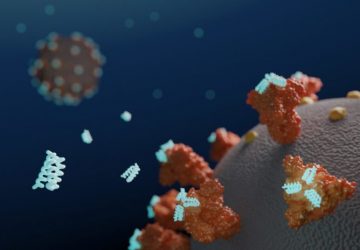
Working with an international team, the scientists used artificial intelligence to create extremely small antibody fragments that can be produced directly inside human cells. Once there, the fragments can attach to proteins associated with disease.
Ordinary antibodies generally function outside cells. The newly redesigned fragments, called intrabodies, have instead been engineered to remain stable within cells, allowing them to target proteins involved in neurodegenerative conditions.
https://www.sciencedaily.com/releases/2026/08/260819041242.htm