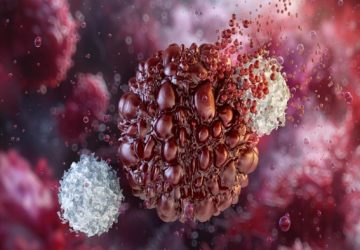
Scientists created smart nanoparticles that can both illuminate hidden glioblastoma cells during surgery and destroy microscopic cancer left behind afterward. In mice, the treatment prevented recurrence and led to 100% survival at 60 days, though it has not yet been tested in humans.
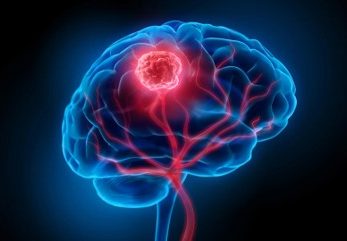
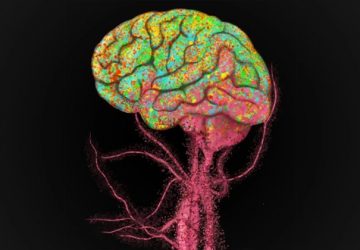
Glioblastoma is considered the most aggressive type of brain cancer.
One reason it is so difficult to treat is that cancer cells spread into nearby brain tissue. That makes complete surgical removal extremely challenging because surgeons must avoid damaging healthy areas of the brain. The blood-brain barrier creates another obstacle by restricting how effectively drugs and radiotherapy can reach the tumor. Together, these challenges help explain why the five-year survival rate is only about 7 percent.
A Two-Function Nanoparticle Platform
Researchers at the University of Technology Sydney (UTS), Harvard and Henan universities have developed a ‘double-punch’ nanozyme platform that aims to tackle both problems using a single system of smart nanoparticles. The findings were published in Science Translational Medicine.
“We’ve engineered a single material that does two jobs in sequence,” said Dr. Bingyang Shi, Chair Professor of nanomedicine from the School of Electrical, Mechanical and Biomedical Engineering at UTS. “It’s a precise guide for the surgeon during the operation, and then a targeted clean-up treatment afterward.”
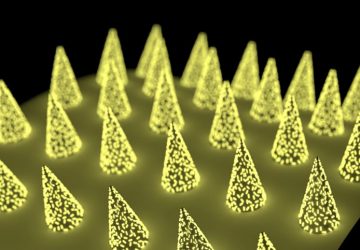
At the center of the system is an extremely thin, two-dimensional sheet covered with individual atoms that are placed one at a time using a method adapted from semiconductor manufacturing. This structure allows the material to switch between two roles. It can help image cancer during surgery and then perform phototherapy after the operation. Both functions are activated using the same near-infrared light.
https://www.sciencedaily.com/releases/2026/08/260826060617.htm