Polyhedral boranes, or clusters of boron atoms bound to hydrogen atoms, are transforming the biomedical industry. These humanmade materials have become the basis for the creation of cancer therapies, enhanced drug delivery and new contrast agents needed for radioimaging and diagnosis. Now, a researcher at the University of Missouri has discovered an entirely new class of materials based on boranes that might have widespread potential applications, including improved diagnostic tools…
Read MoreFederal U.S. agencies need to prepare for greater quantity, range of biotechnology products
A profusion of biotechnology products is expected over the next five to 10 years, and the number and diversity of new products has the potential to overwhelm the U.S. regulatory system, says a new report from the National Academies of Sciences, Engineering, and Medicine. The U.S. Environmental Protection Agency, the Food and Drug Administration, the U.S. Department of Agriculture, and other agencies involved in regulating biotechnology products should increase their…
Read MoreSilk ‘micrococoons’ could be used in biotechnology and medicine
Microscopic versions of the cocoons spun by silkworms have been manufactured by a team of researchers. The tiny capsules, which are invisible to the naked eye, can protect sensitive molecular materials, and could prove a significant technology in areas including food science, biotechnology and medicine. The capsules were made at the University of Cambridge using a specially-developed microengineering process. The process mimics on the microscale the way in which Bombyx…
Read MoreZika virus: Antibodies identified with therapeutic and diagnostic potential
A team of researchers from the Institute for Research in Biomedicine (IRB, USI Università della Svizzera italiana) and the Swiss biotech company Humabs BioMed SA has identified novel therapeutic monoclonal antibody candidates isolated from Zika-infected patients and new strategies for Zika virus diagnostics. An article published in the scientific journal Science describes for the first time an in-depth analysis of the human antibody and T cell immune response to the…
Read MoreComputer program developed to diagnose and locate cancer from a blood sample
Researchers in the United States have developed a computer program that can simultaneously detect cancer and identify where in the body the cancer is located, from a patient’s blood sample. The program is described in research published this week in the open access journal Genome Biology. Professor Jasmine Zhou, co-lead author from the University of California at Los Angeles, said: “Non-invasive diagnosis of cancer is important, as it allows the…
Read MoreWearable graphene-based biomedical device to monitor, combat diabetes
A scientific team from the Center for Nanoparticle Research at IBS has created a wearable GP-based patch that allows accurate diabetes monitoring and feedback therapy by using human sweat. The researchers improved the device’s detecting capabilities by integrating electrochemically active and soft functional materials on the hybrid of gold-doped graphene and a serpentine-shape gold mesh. The device’s pH and temperature monitoring functions enable systematic corrections of sweat glucose measurements as…
Read MoreSan Diego cancer biotech raises $38.6 million
Cancer drug developer eFFECTOR Therapeutics has raised $38.6 million in venture capital funding, the San Diego biotech company said Monday. The company’s technology modifies how proteins are manufactured according to instructions carried in DNA, a process called translation. The drugs it’s developing are called selective translation regulators, aimed at restoring normal function in processes that have gone awry in cancers. The drugs are meant to stand on their own, as…
Read MoreLA County’s Biotech Companies Develop a Broad Array of New Products
Several biotechnology firms that are based in Los Angeles County have established new solutions for various untreatable conditions such as rheumatoid arthritis, sickle-cell anemia, and different types of cancers. The companies are using state-of-the-art technologies in developing products that are sustainable and friendly to the environment. They have produced chemicals that can be used in manufacturing plastics without depending on petroleum, meat replaces that are grown in labs, and replacements…
Read MoreZooming in on the phycosphere: the ecological interface for phytoplankton–bacteria relationships
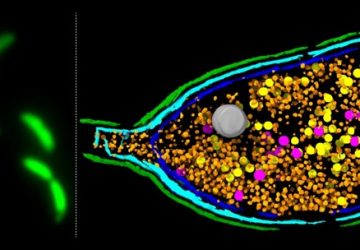
By controlling nutrient cycling and biomass production at the base of the food web, interactions between phytoplankton and bacteria represent a fundamental ecological relationship in aquatic environments. Although typically studied over large spatiotemporal scales, emerging evidence indicates that this relationship is often governed by microscale interactions played out within the region immediately surrounding individual phytoplankton cells. This microenvironment, known as the phycosphere, is the planktonic analogue of the rhizosphere in…
Read MoreNon-natural biomedical polymers produced from microorganisms
This schematic diagram shows the overall conceptualization of how metabolically engineered E. coli produced a variety of PLGAs with different monomer compositions, proposing the chemosynthetic process of non-natural polymers from biomass. The non-natural polymer PLGA and its other copolymers, which are produced by engineered bacteria developed by taking a systems metabolic engineering approach, accumulate in granule forms within a cell. Credit: KAIST Renewable non-food biomass could potentially replace petrochemical raw…
Read More